Mike's Astro Photos
Oct.24 2012

SRO Update – Mission Accomplished

by , under Observatory

I flew out to Fresno CA this past Thursday night with the goal of getting my telescope equipment that I had shipped out the week before and setting it up at Sierra Remote Observatories (SRO). The day I flew out, a news story broke about a massive meteorite producing fireball that happened off the coast of California and was thought to have dropped meteorites west of  San Francisco. This was certainly a sign that my mission was Universe approved!

I picked up my gear (515 lbs) at a warehouse in Fresno Friday morning, packed my rented SUV chock-a-block full without a space to spare and then drove up the mountains to the Observatory inside the Sierra National Forest. Here’s a picture of the view near SRO.

Sierra National Forest

The site is literally amazing — better than Disney World. There are about a dozen single station roll-offs all lined up next to each other in two rows and then one massive roll-off, quite possibly the largest roll off observatory in the world. This would be my telescope’s new home. The building is big enough to house 10-12 scopes and an amazing feet of creativity and engineering skills. I was literally blown away by what these guys had created here.

Sierra Remote Observatories – Big Roll Off

My first day started around 8:00 am, I had a hard time finding the warehouse thanks to apple maps, but ended up finding it by 10:00 am (I had to use my brain). I was at the site by 12 and then spent the next 7-8 hours unpacking and physically setting up all of the equipment. I had everything mounted by 8pm, but had not connected any of the computer or software. I so wanted to stay the night tinkering and observing but I was literally exhausted. I would handle this phase much better after a night of rest, so we had dinner and then called it a night.

RCOS at SRO – Photo Credit Sam Miller

The next morning I left my rented cabin in Shaver Lake and drove back to the observatory. I spent the day setting up the computer cables, software, debugging problems, tying down the scope and camera wires, testing all of the movement and rotations so that wires wouldn’t get tangled up, collimating the scope and that kind of stuff. I had this all about done by 4:00 PM and then drove into town to grab some food and warmer clothes. It was the peak of the Orionid meteor shower  and it would also be my first light on the scope at its new home and I would be staying up all night long!

RCOS Peaking Out – Photo Credit Sam Miller

I planned to do my polar alignment, final collimation and other software setups and then hopefully spend the rest of the night imaging. I ended up spending most of the night collimating and didn’t get through everything I needed to. I jumped back and forth between telescope tweaking and photographing the meteor shower. This was a really cool place to do some wide field astrophotography.

Sierra Remote Observatories At Night

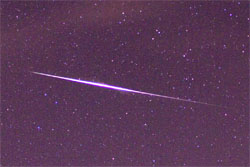
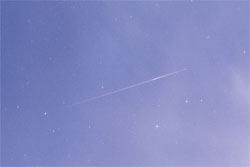
I was so busy with the scope setup, I barely had time to observe the shower and only saw a few meteors. In addition a storm was coming in and the humidity levels were up, causing my camera to fog up. I was only able to get a few meteor photos, but I’m really happy with them considering the level of attention they received.

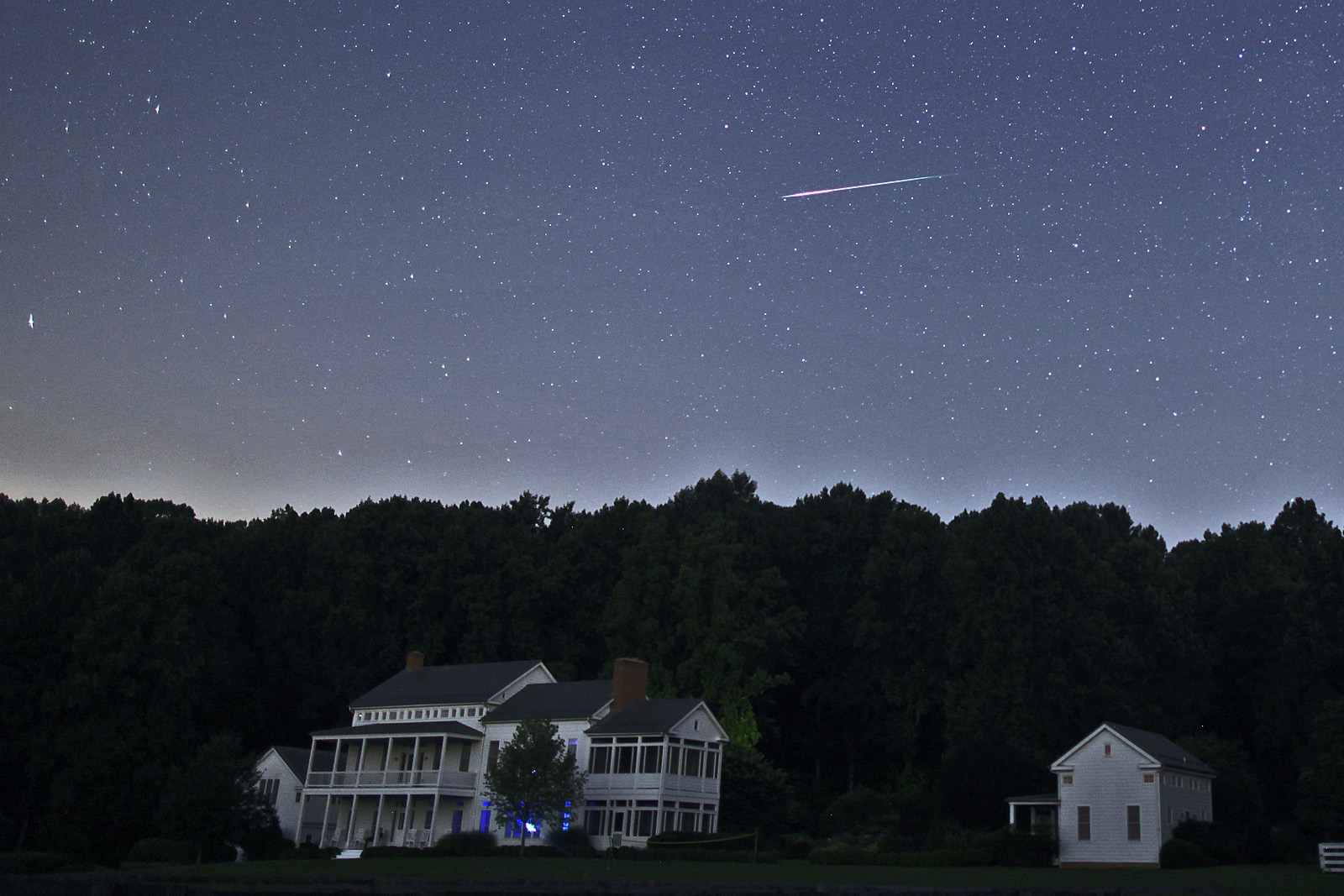
Orionid Meteor – October 20th, 2012

Here’s a nice long Orionid Meteor from the 2012 peak.

Orionid Meteor – October 20th, 2012

Another positive sign from the Universe and my favorite picture of the night was this shot of a meteor right inside Orion’s bow. How cool is that!? For those who don’t know, Orion was the hunter and carried a bow (or in some interpretations a shield), this meteor looks like one of Orion’s arrows right before it is shot.

Orionid Arrow Meteor – October 20th, 2012

Here’s a zoomed in crop of just the Orion arrow meteor.

Orionid Arrow Meteor – October 20th, 2012

I tinkered with the scope until dawn, but still had more work to do before it would be ready for imaging. I worked on it through the day on Sunday but wouldn’t you know it clouds rolled in Sunday night and I couldn’t finish everything off. That’s ok though, now that I’m back I should be able to get the rest of the work done and be imaging in a week or so.

RCOS At Night – Photo Credit Sam Miller

I left California Monday morning and headed to Tucson to pick up my slice of Lunar Meteorite, but that is another story.

2 Comments : more...

Oct.17 2012

A Couple Of Orionids 2012

by , under Comets & Meteors

The Orionid Meteor Shower peaks this Saturday evening and Sunday morning! It was clear last night and I got some warm up practice time in. There wasn’t a lot of activity, but I did catch a pair of Orionid Meteors.

A Pair of Orionid Meteors – October 17th, 2012

Comments Off more...

Oct.11 2012

Telescope is on the move

by , under Observatory

I first contacted Greg Morgan at Sierra Remote Observatories in November 2010. SRO is a telescope park nestled in the Sierra Nevada Mountains an hour east of Fresno, CA. The park is very similar to a data center in the computer world — its a secure location, providing power and internet connections at a super dark high elevation location. The mountains are above the smog layer of the atmosphere and block most of the clouds coming in from the Pacific leading to 280 clear nights per year. When I first contacted them they didn’t have any openings, but were just starting the process of building a new observatory building that would house 20+ telescopes. I put down a deposit and signed the lease and started building out the rig in my backyard. Over the next two years the guys at SRO walked me through the process and help me out immensely with learning the ropes of robotic astrophotography. I would ultimately control the telescope remotely via the internet from across the country, but this was quite an overwhelming project when first starting out. The observatory building process took longer than expected, but I put the time to good use and I really needed it. It literally took me all of this time to get all of the equipment and learn how to set it up and use it properly. I had finally gotten to the point where everything was working perfectly just a few weeks ago. They just finished the observatory in California and I had to tear down my astro-rig and ship it 2000 miles across the country. It shipped out yesterday on a freight truck. I will fly out to California next weekend and if all goes well I will be setting everything up next Friday and Saturday night during the peak of the Orionid Meteor Shower!

Here’s a picture of my observatory in Freeland, Maryland. I love the fall colors this time of year.

Mason Dixon Observatory – Freeland MD


Here’s a picture of me with my scope right before we tore it down. I’m literally about ready to cry.

Mike Hankey with RCOS 14.5, Paramount ME and Apogee U16M


This is an amazing bunch of hardware.

RCOS 14.5, Paramount ME & Apogee U16M


The imaging train starts with a 360 degree rotator and field flattener, some extension tubes, an Astrodon MMOAG (Monster Manual Off Axis Guider), an SBIG 402 guide camera, a 10 position color filter wheel and then the Apogee U16M full format CCD camera.

Image Train: Rotator, MMOAG, SBIG 402 Guide Camera & Apogee U16M


The Apogee CCD camera is super cooled with a huge CCD chip!

Apogee U16M CCD Camera and Filter Wheel


Front view of RCOS with 14.5″ primary mirror.

RCOS 14.5


Paramount ME German Equatorial Mount looking sad and lonely without the scope.

Paramount ME


And finally all that was left behind…

A Lonely Pier Tech II


We wheeled the Paramount up the hill and into the garage.

Paramount ME – Heading Out


Packed everything up and put it on the truck yesterday. Note I do not use an apple computer for controlling the observatory telescope, i just had the box lying around and used it to pack my PC.

On The Truck

Comments Off more...

Oct.07 2012

Comet 168P/Hergenrother

by , under Comets & Meteors

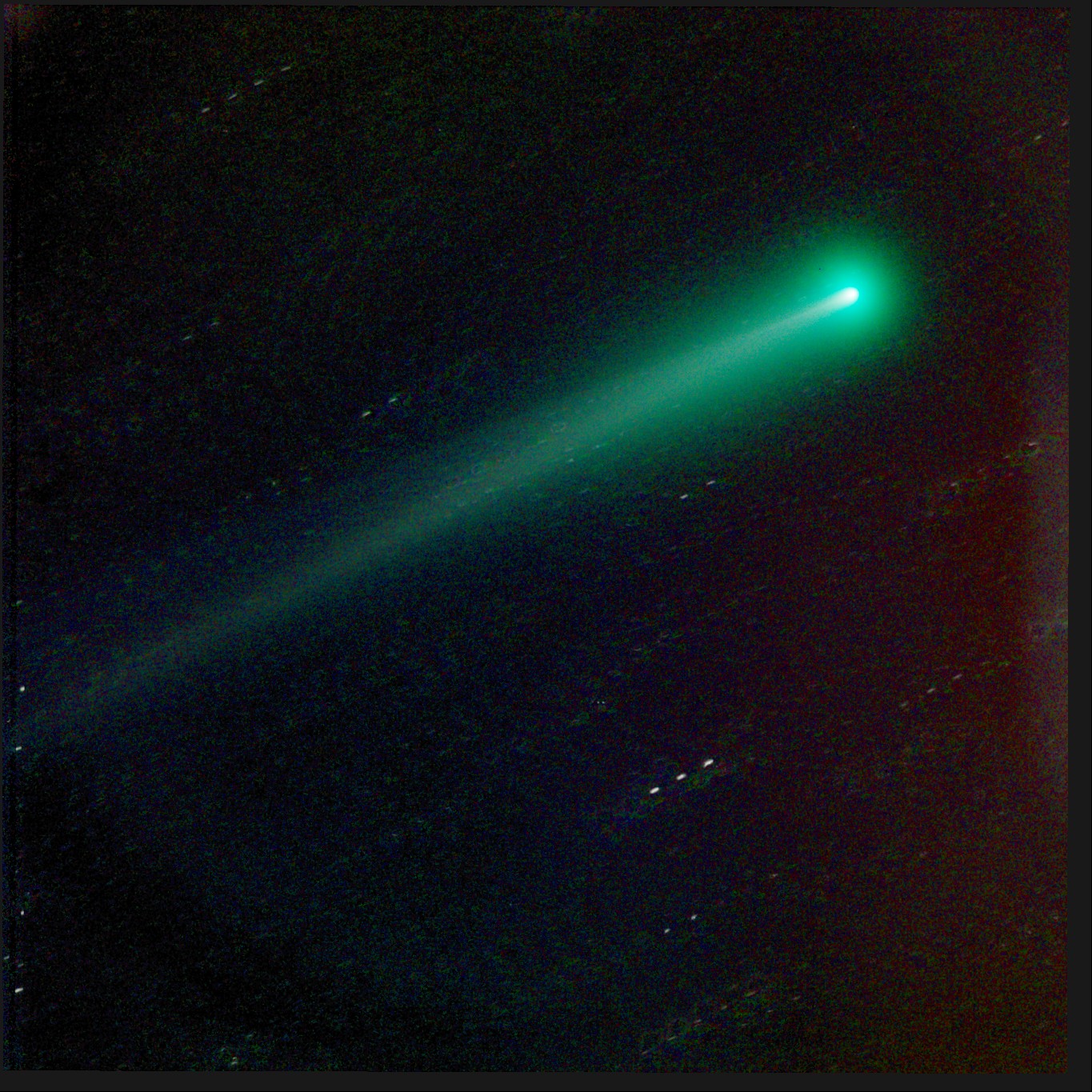
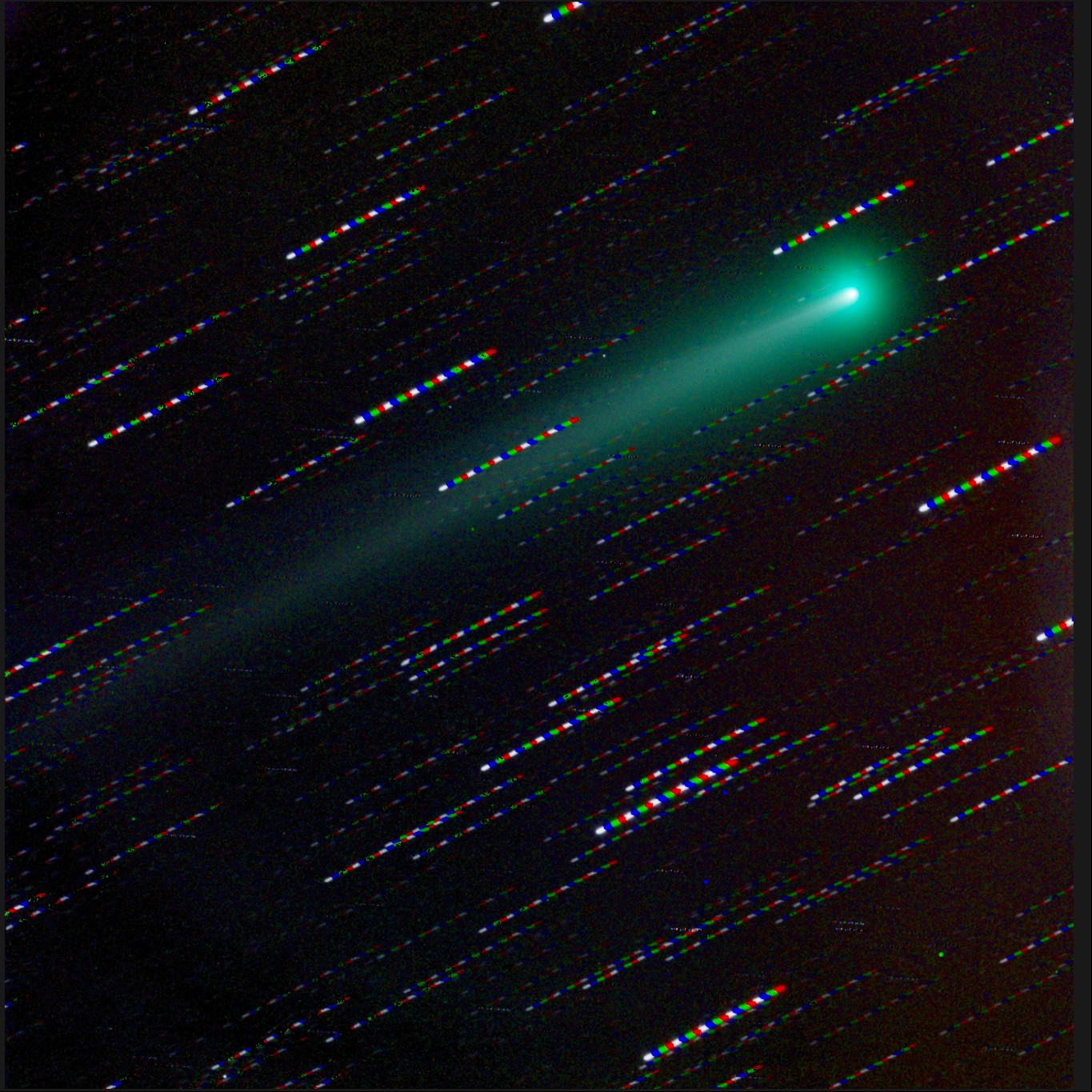
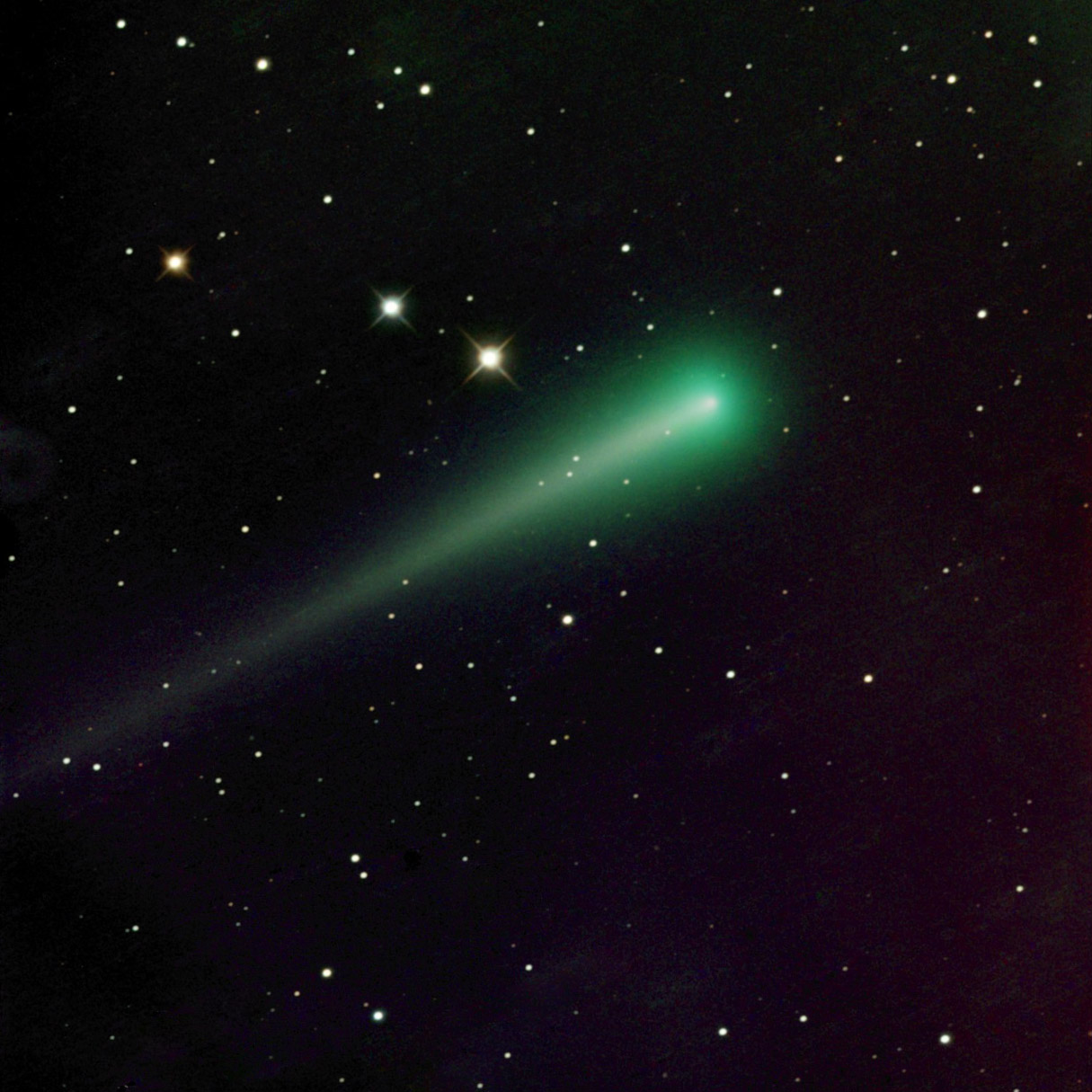
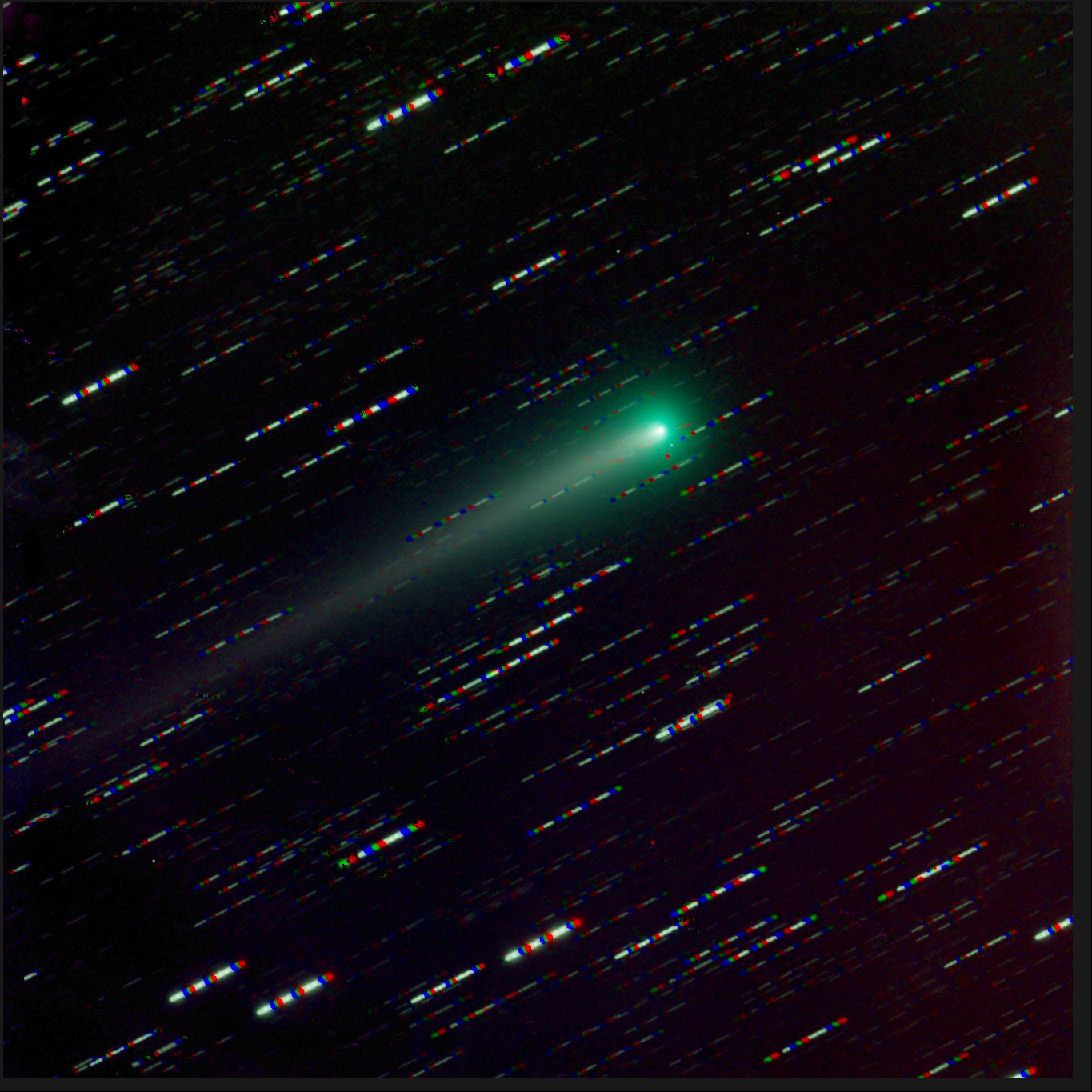
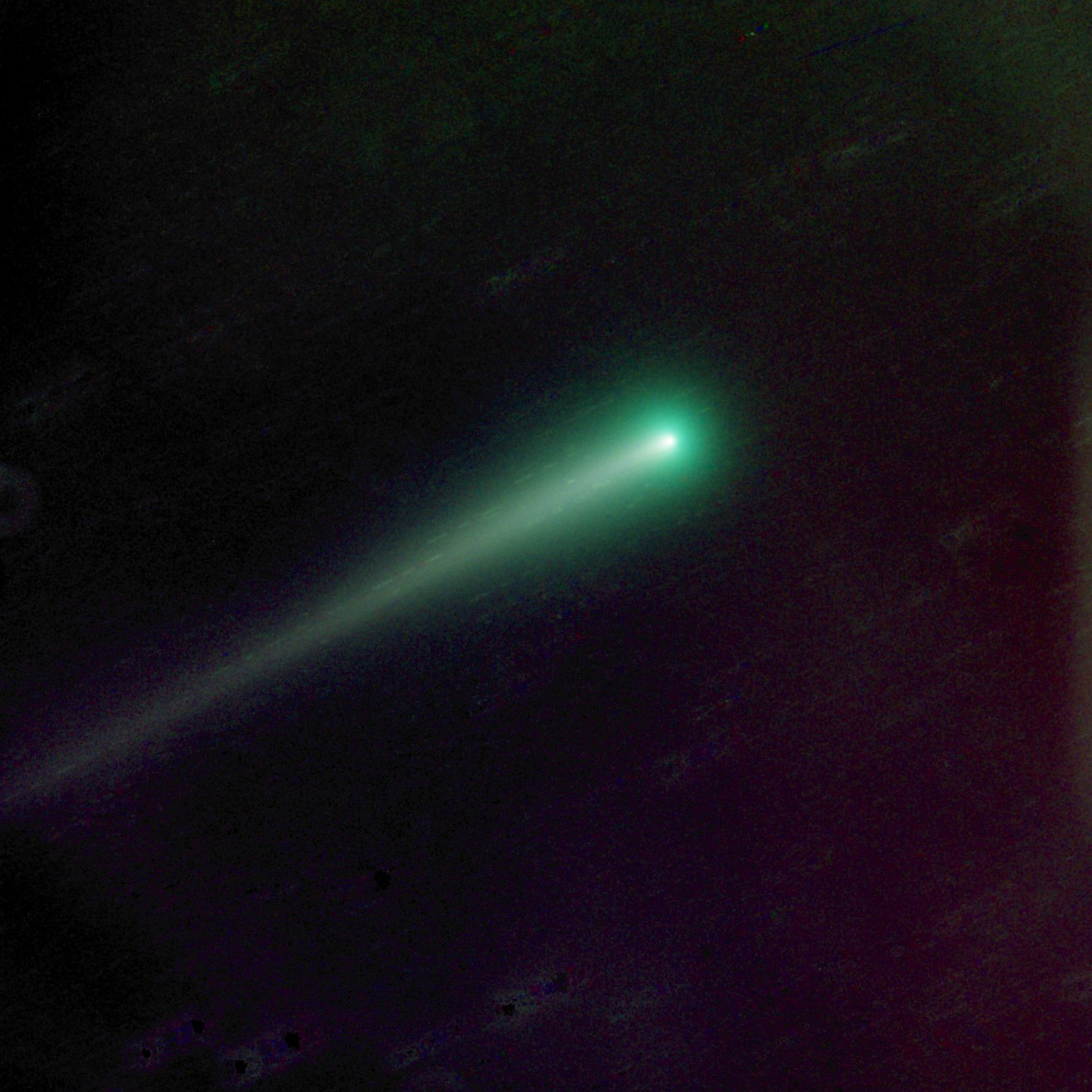
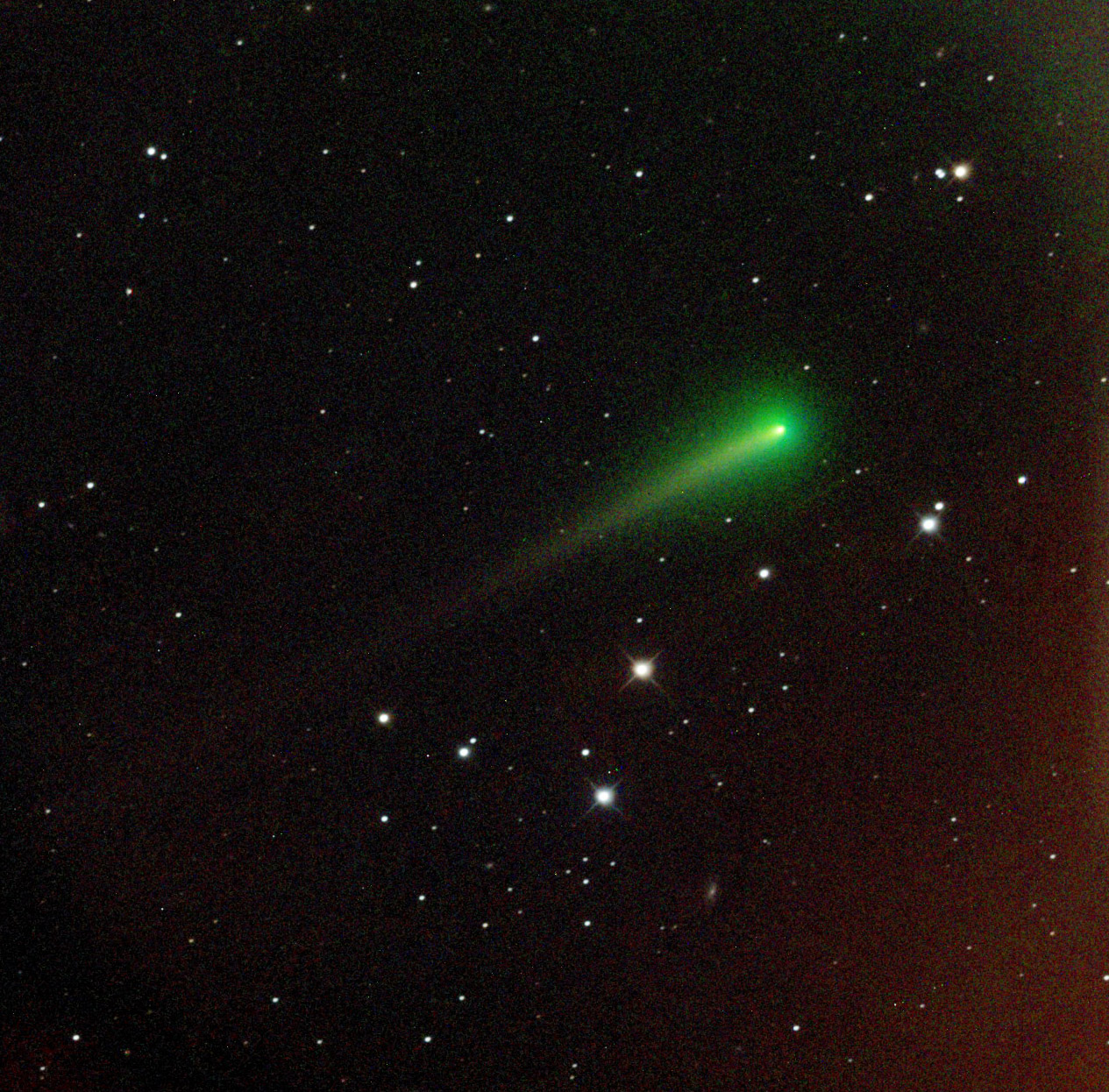
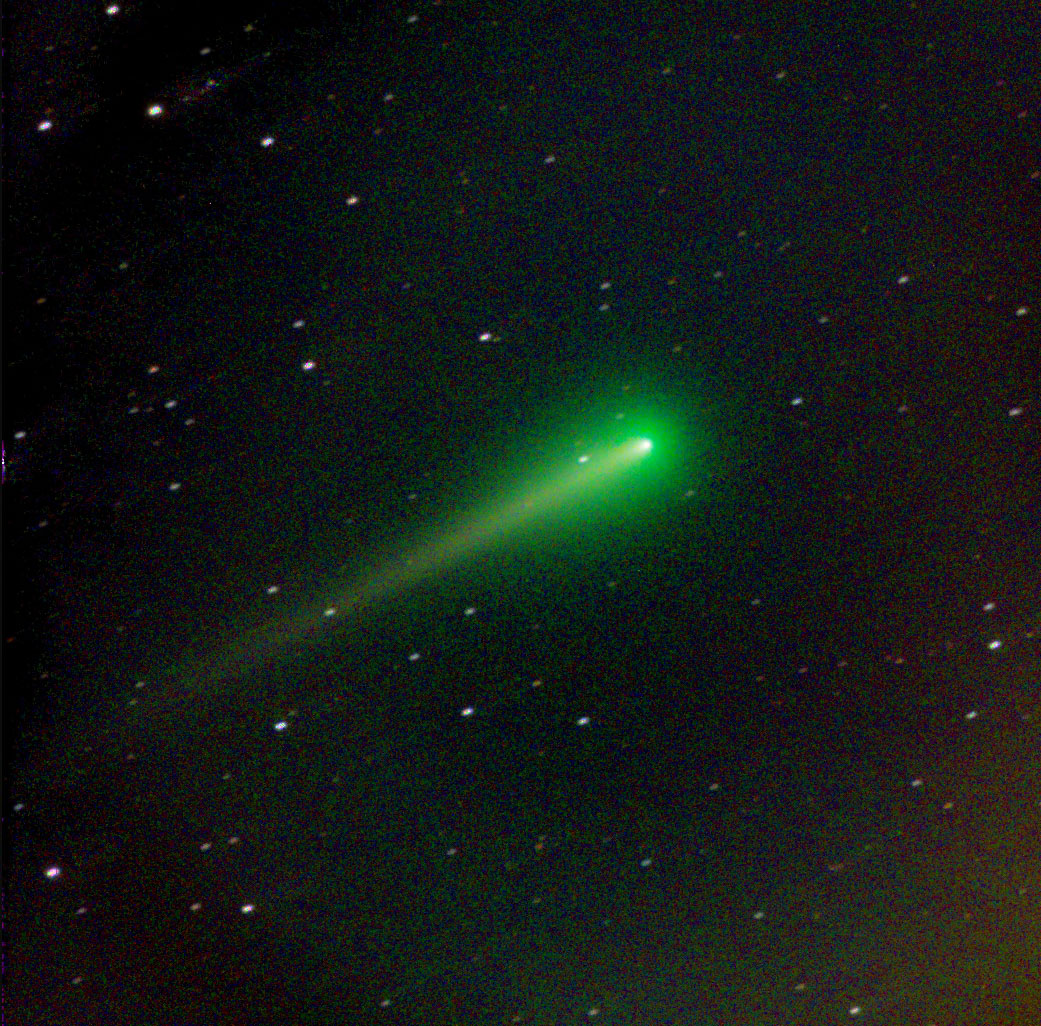
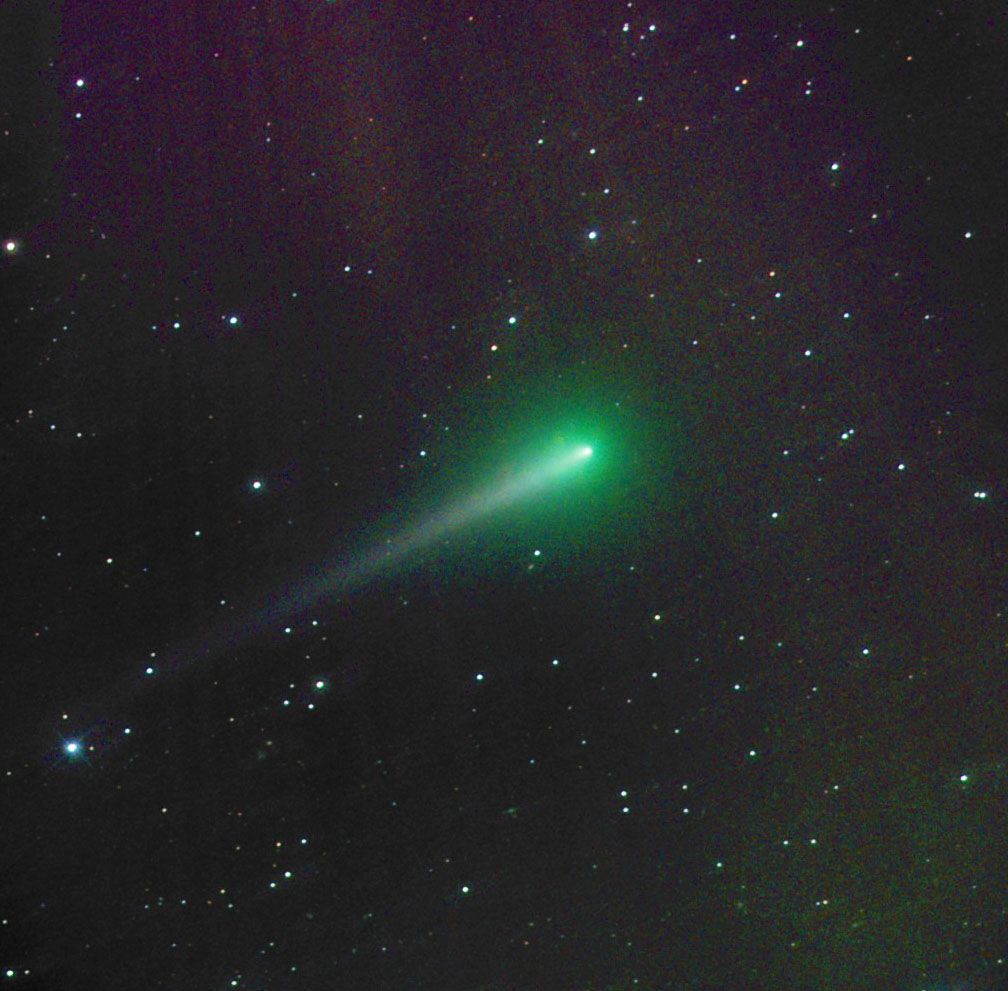
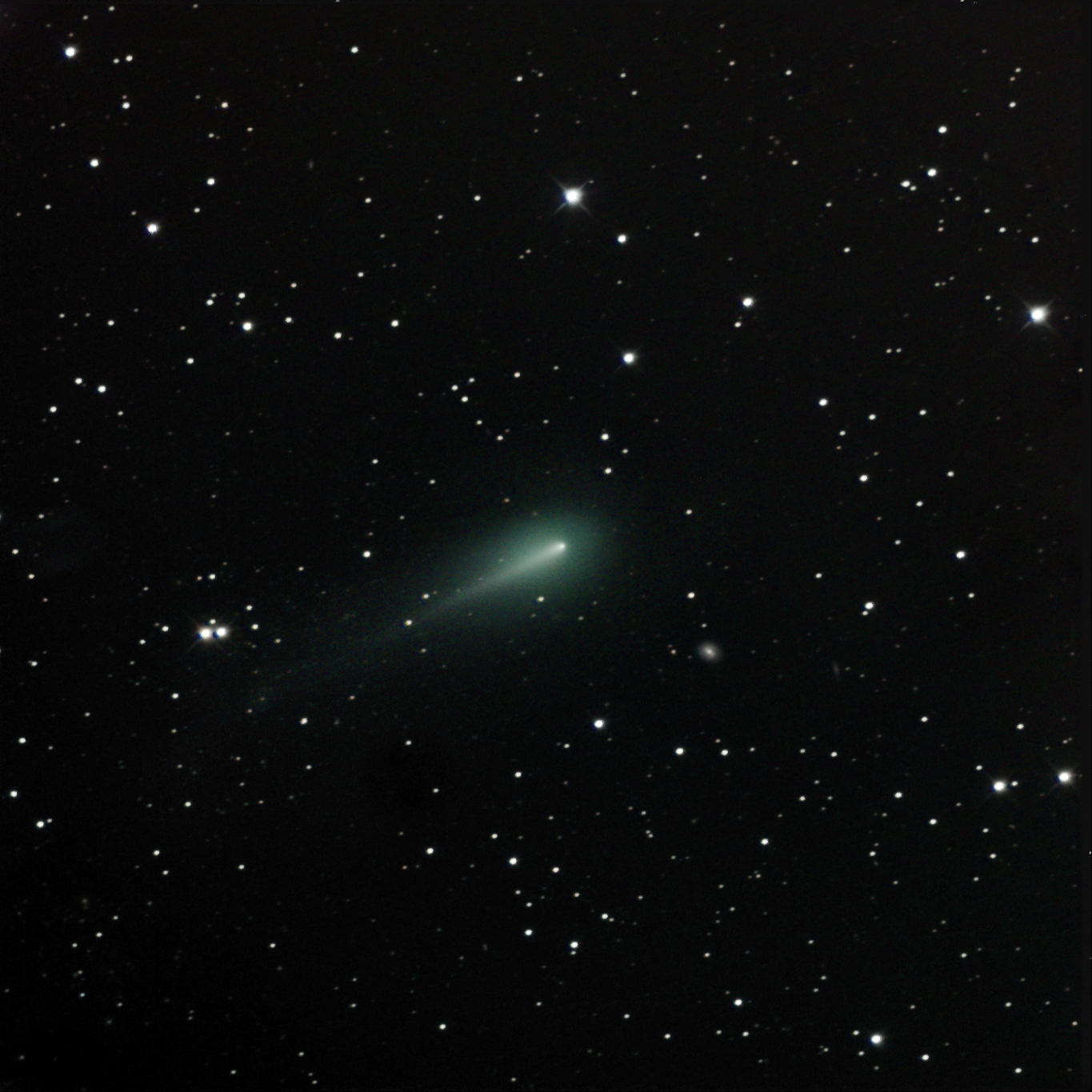
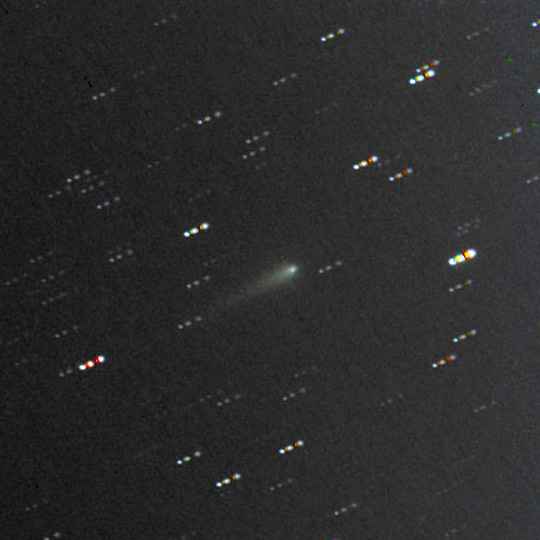
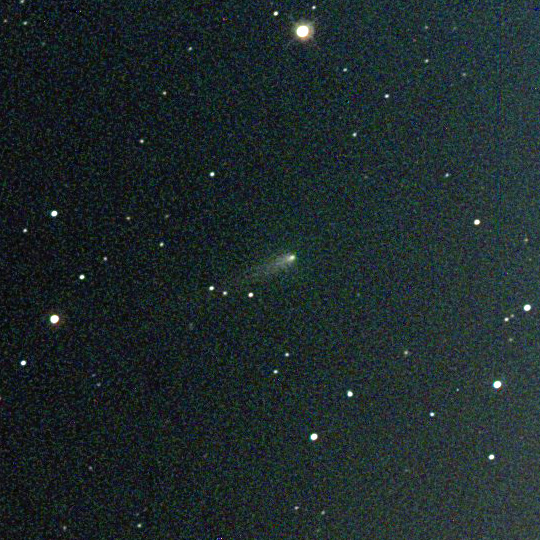
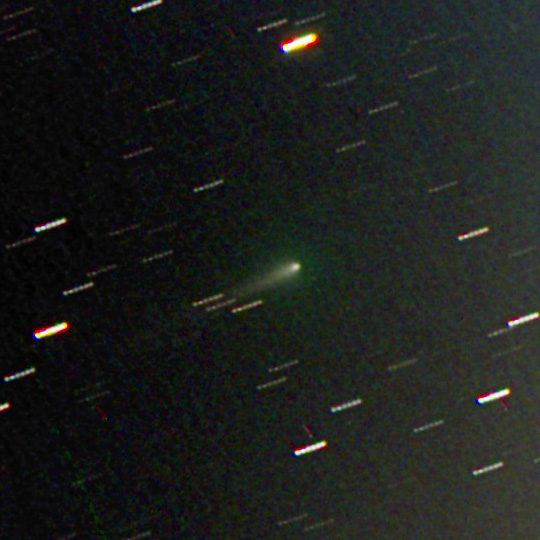
Here’s a quick photo of Comet 168P/Hergenrother. This comet just reached its perihelion (closest point in orbit) on 1 October 2012. The photo below was created with a 1 minute exposure of RGB and 2 minutes of Luminance. There’s a good bit of noise in this image, but I figured out a bunch of tricks for taking and processing comet images while I was shooting this series. It was a productive session and my next round of comet photos should be much better. There’s a few tricks to photographing comets well (just like everything) and I look forward to shooting this guy again before he travels too far away. Check out the pair of faint distant galaxies in the lower right corner.

Comet 168P/Hergenrother – October 6th, 2012

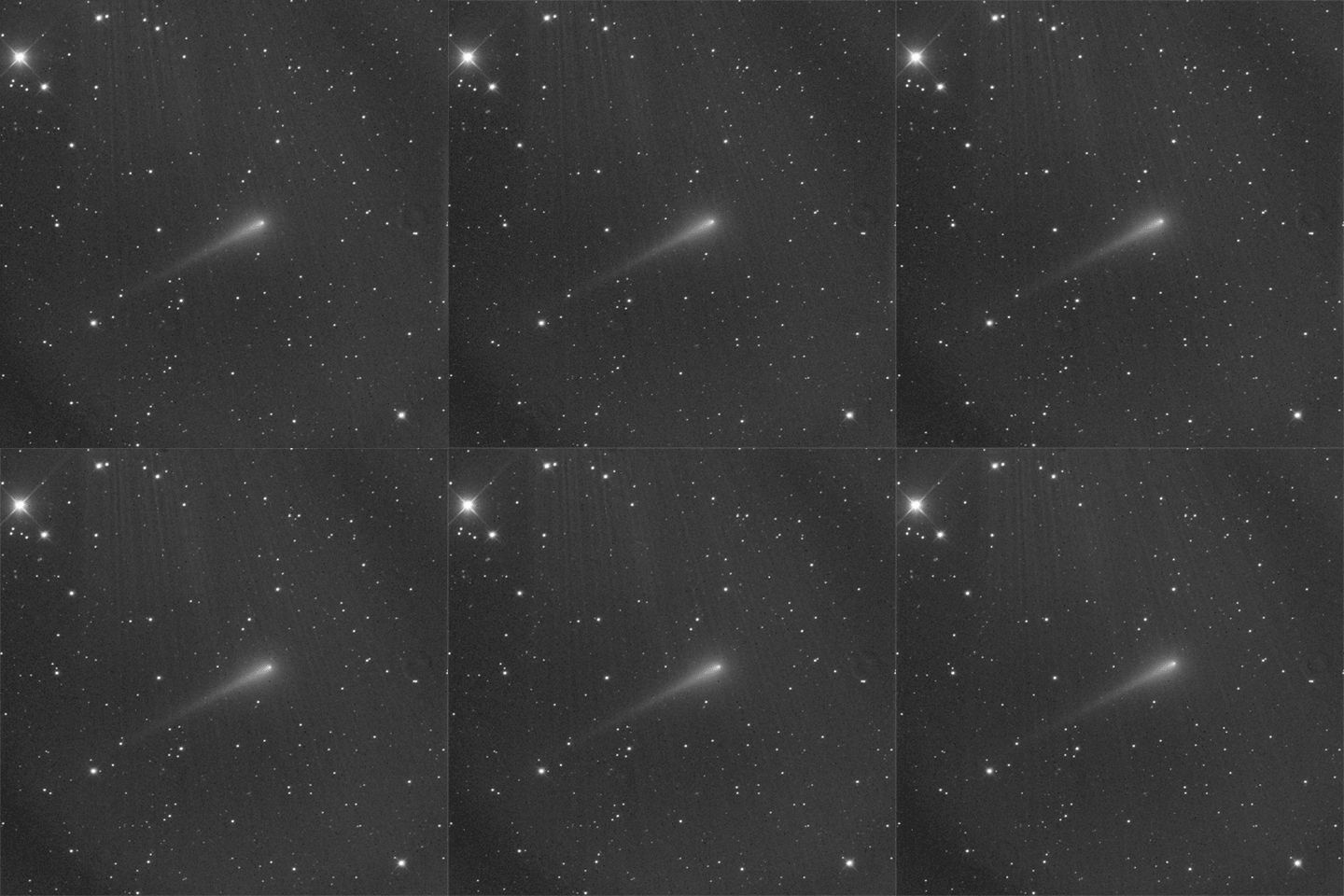
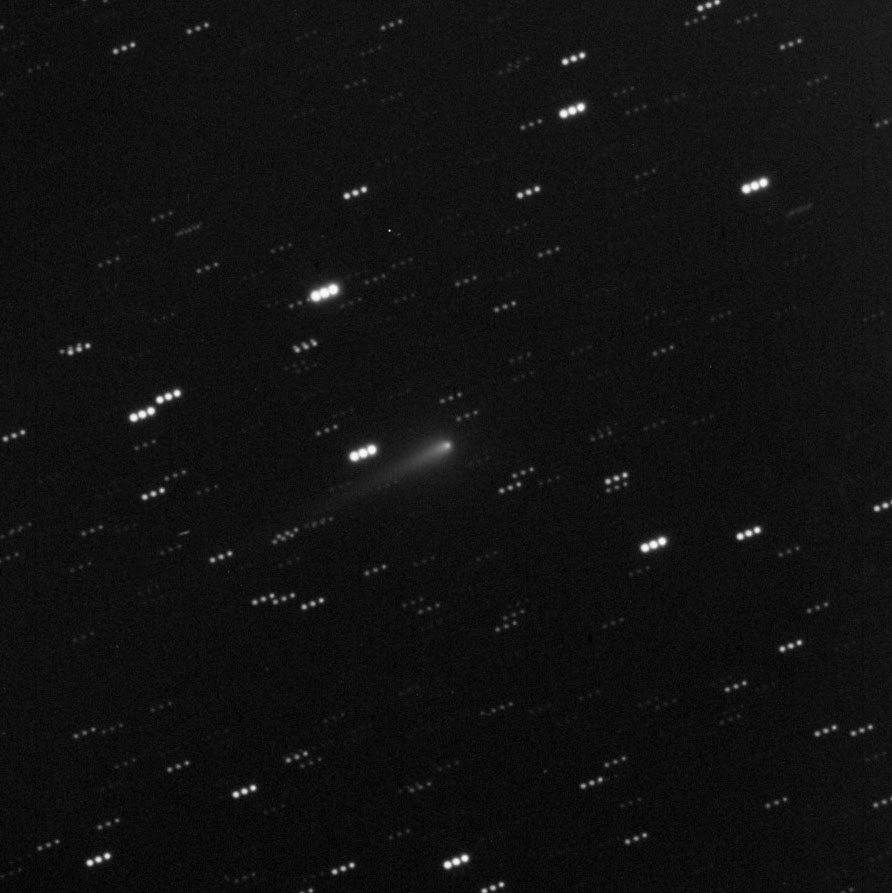
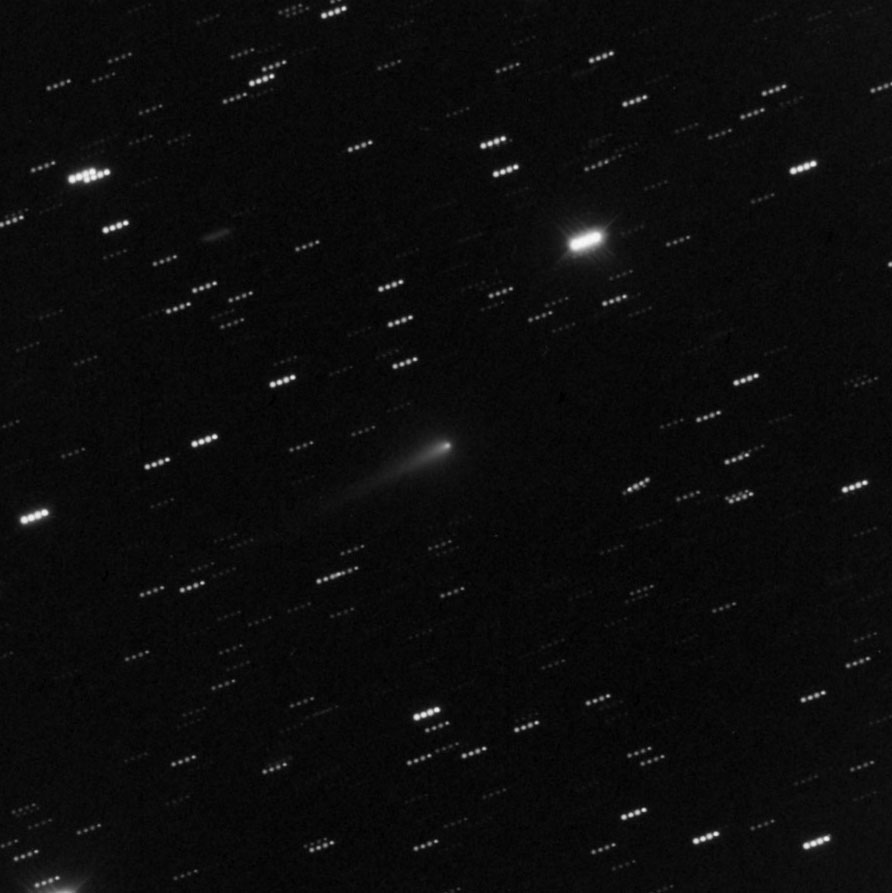
And here’s an animation of 10 frames of the comet. Each exposure is 30 seconds and there is an aproximate 300 second break in between each frame.

Animation of Comet 168p/Hergenrother from October 6th 2012

Photo Details
Comet 168P/Hergenrother
RGB 60 seconds 120 seconds Lum
Total exposure 2 hours 30 minutes
Camera: Apogee U16M
Guider: SBIG 402 with MMOAG Off Axis Guider
Telescope: RCOS 14.5
Mount: Paramount ME
Location: Freeland MD
Date: 10/6/2012
Software: The SkyX, MaximDL, FocusMax, CCDAutoPilot, CCDStack, Photoshop

Comments Off more...

Sep.13 2012

Potentially Hazardous Asteroid – 2012 QG42

by , under Comets & Meteors

Near Earth Asteroid, 2012 QG42 was discovered on August 26th and will be passing Earth tonight, Thursday September 13th, 2012. Moving at 7 miles per second this asteroid is estimated to be 625 to 1,400 feet long. I was able to acquire the target last night and take a few pictures. Here’s an animation of 10 frames of the asteroid. Each frame is a 60 second exposure.

Near Earth Asteroid – 2012 QG42


Here is a composite image of the asteroid over the 10 minute period I was photographing it.

Near Earth Asteroid – 2012 QG42

1 Comment more...

Sep.08 2012

High Resolution Andromeda Galaxy – Messier 31

by , under Galaxies

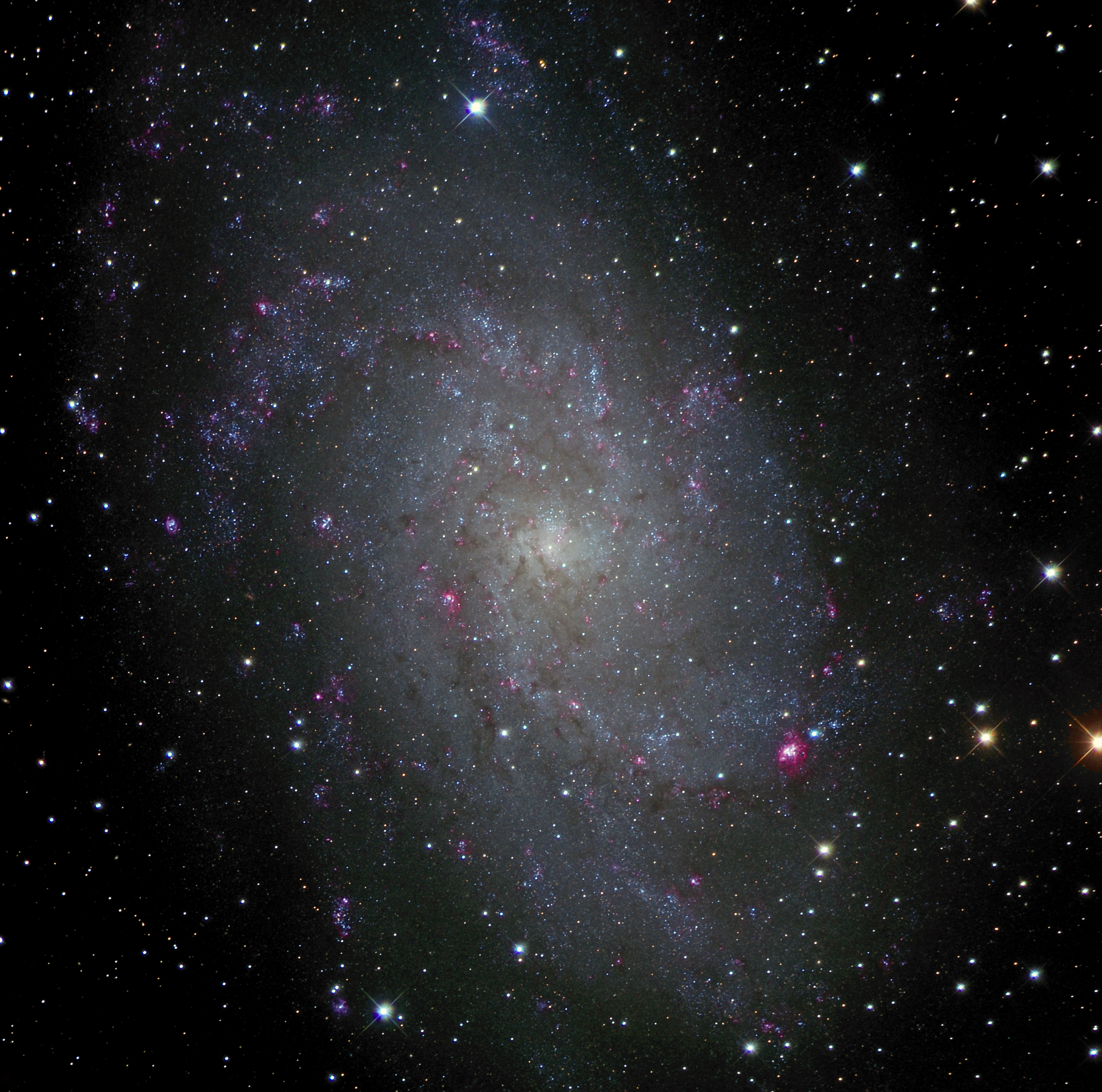
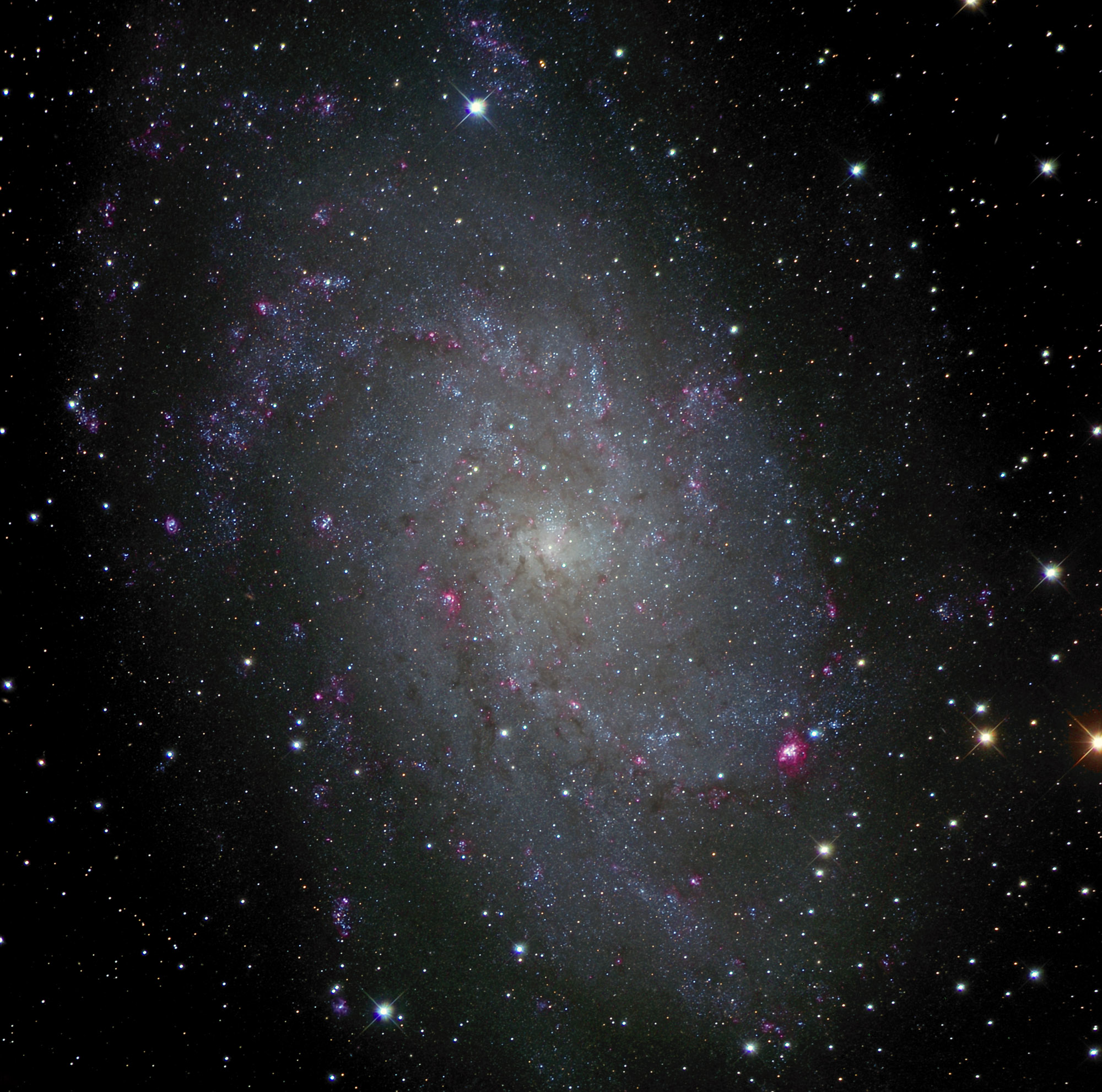
The Andromeda Galaxy has been one of my favorite pursuits since I started with astrophotography. It took me a while to figure out how to shoot it and each telescope you use reveals different things about the galaxy. I took this photo of Andromeda Friday night using a 14.5 inch  RC and full format CCD. Andromeda is still too big to fit completely in this field of view, but I think we are getting about 75% of it. For reference, this is the same setup I used on the blue moon, so yes, Andromeda is bigger than the full moon in the night sky. Its just dimmer and harder to see with the naked eye. Imagine what it would be like to look up in the sky and see something like this.

The Great Andromeda Galaxy in High Resolution – September 7th, 2012

Click the picture above for a [2400x2400] version or download a super high res [3700x3700] version of Andromeda here.

For comparison purposes, here are some past photos I’ve taken of Andromeda: Andromeda with a FLT 98 wide field telescope and SBIG ST8300 CCD in September 2011, Andromeda with FLT 98 and DSLR Camera in September 2010, the first picture I ever took of Andromeda with a Celestron CPC1100 and DSLR in January 2010 and of course the telescopic Bolide with Andromeda picture from July 2009.

Photo Details
Messier 31 – The Great Andromeda Galaxy
RGB 50X50X50 Minutes Each
Total exposure 2 hours 30 minutes
Camera: Apogee U16M
Guider: SBIG 402 with MMOAG Off Axis Guider
Telescope: RCOS 14.5
Mount: Paramount ME
Location: Freeland MD
Date: 9/7/2012
Software: The SkyX, MaximDL, FocusMax, CCDAutoPilot, CCDStack, Photoshop

here’s a zoomify version that is fun to play around with. Click the image to zoom in and the icons to control. Full screen mode is pretty cool.

2 Comments :, more...

Sep.01 2012

Blue Moon

by , under Lunar

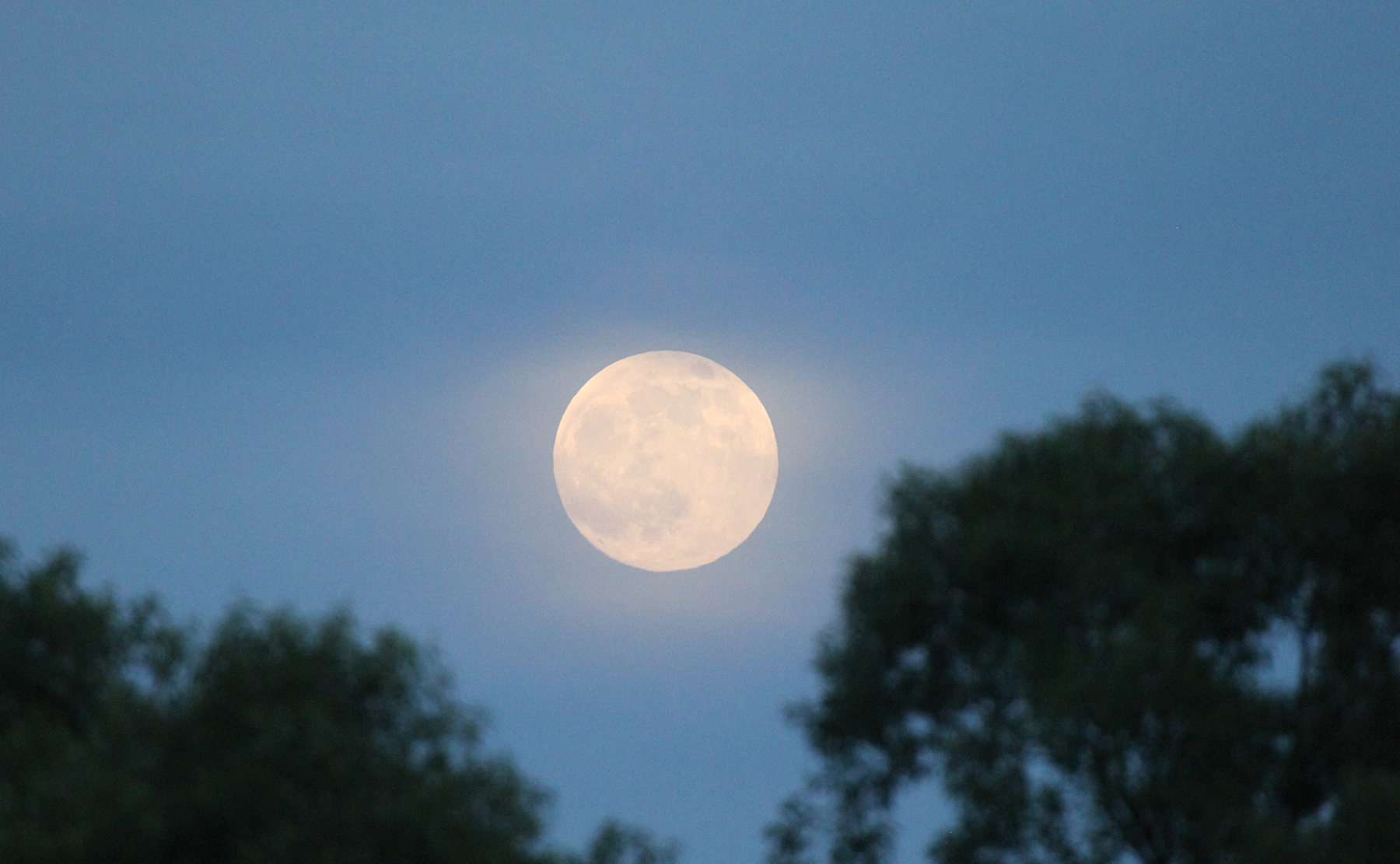
August 31st, 2012 hosted the last Blue Moon we will see in a while.

Blue Moon – August 31st, 2012

As you probably already know a Blue Moon is not really blue. Its just the name we give for the moon when the full phase occurs twice in one month. This is considered a somewhat rare occurrence (not really in astronomical terms) and the next one won’t happen until 2015.

Blue Moon Rising – August 31st, 2012

A few hours after moon rise, I spotted it with my telescope and took some high resolution photos. After stacking and processing I was pleased with the results.

Hi Resolution Photo of the Blue Moon – Click to Enlarge!

Click the following link to download a super high resolution photo of the moon 4000×4000! Great for desktop wallpaper.

To create this high res picture of the moon, I took 50 exposures using a full format CCD camera with a H-alpha filter. The H-alpha filter cuts down on the light so much you can capture the moon images without over exposing (great trick). I then aligned and stacked the 50 images in Registax. This process improved the focus and clarity of the image by 10x! I really like this method of Lunar photography. Its simple, fast and easy and the images turn out great.

Comments Off more...

Aug.17 2012

Perseid Meteor Shower – Yosemite National Park 2012

by , under Comets & Meteors

I flew out to Fresno California to observe the Perseid meteor shower peak with Brendan Fallon my old friend, college roommate and meteorite hunting companion. We made it to the Yosemite National Park by early afternoon Friday, checked out the valley and scoped out possible locations for observing and photographing the meteor shower. Later in the day, we worked our way up to glacier point to observe the shower the night before the peak.

Mike Hankey with Perseid Meteor at Sentinel Dome, Yosemite National Park – August 12th, 2012

Glacier point is known as an astronomers hangout and many of the rangers recommended it to us as the place to be. I was surprised by how many people where there to watch the shower Everyone was talking about the shower and really excited about it . The San Jose Astronomical Society was hosting a star party on the ridge and over 100 people where there to see the show. We found a little area outside the fences on the edge of Glacier Point and setup our equipment with intentions of staying there all night. Camping is not allowed at attractions like Glacier Point but staying there all night, so long as you’re not sleeping or pitching a tent is totally fine. We were all setup a little before sunset and shot the skies with two cameras the entire night.

Composite Image of Perseid Meteor Shower - August 12th, 2012

Composite Image of Perseid Meteor Shower – August 12th, 2012

I spent most of the night fiddling with the cameras and had less time to relax and observe the shower, but Brendan was able to kick back and counted over 100 meteors the first night. I was not keeping a good count, being distracted by technical devices, but registered about 50-60 meteors. We both stayed up the entire night, and as celestial fortune would have it, on this night and only this night the moon, the Pleiades, Jupiter, Venus and the Sun would all rise over half dome. We were in the perfect location to watch all of this along with thousands of shooting stars all over the place. It was amazing.

Moon Rise Over Half Dome – August 11th, 2012

After the sun rose around 7:00 AM we packed up our gear and slept for the rest of the day at a hotel an hour away from the park.

Glacier Point Camp Site – Aug 12th, 2012

On Saturday, we made our way back to Yosemite by 7:00 PM and headed straight for Sentinel Dome. The top of the dome is about an hour hike from the parking lot and we each had packs filled with camera equipment and camping gear. At the peak of the dome in the center of the space, there was a big rock with a leveled metal compass in the middle. It was the perfect perch for my portable astrotech pier and tracking mount.

A cool compass and some camera gear – August 12th, 2012

I was so amped to be on top of Sentinel Dome at 8,100 feet above sea level with 360 degree views of the entire park. It was amazing! After spending a night on Sentinel Dome I am convinced this is the BEST place on the planet to observe a meteor shower.

Composite Image of Perseid Meteor Shower – August 12th, 2012

Every landscape view was breath taking, the skies were as dark as I’ve ever seen and there were meteors everywhere every minute. What else could you ask for?

Perseid Meteor With Lone Pine Tree on Sentinel Dome – August 12th, 2012

I was much better about my counting this night and we played a counting game together, competing to see who would observe more meteors. Each time one of us saw a meteor we needed to say our count out-loud followed by the other persons count. It was a competition the entire night and helped keep us awake, alert and engaged in the shower. For the night of the peak I was able to count 250 meteors and Brendan counted 246.

Milkyway Galaxy with Perseid Meteor – August 12th, 2012

Sentinel Dome is harder to get to than Glacier Point and we thought we would have the whole place to ourselves, especially since no-one was there after sun-set, but believe it or not throughout the night, several parties arrived at the dome after dark. Some getting there as late as two or three in the morning. I was again impressed with how many people who were interested in the shower and dedicated enough to make it out. We all shared a common bond watching the shower together from one of the highest points in Yosemite park.

Milkyway Galaxy with Perseid Meteor – August 12th, 2012

That morning we watched the sun rise again and then hiked back to our car.
We were both exhausted and sleep deprived but still wide awake and pumped up from the adrenaline of the park, the meteors and the observing experience.

Sun Rise Over Half Dome Yosemite National Park – August 12th, 2012

To date, this is the very best meteor observing experience I have ever had and I am convinced Yosemite and specifically Sentinel Dome is the best meteor observing location in the world for viewing the Perseid Meteor Shower.

Mike Hankey in front of Sentinel Dome – August 13th, 2012

4 Comments : more...

Jul.19 2012

Messier 16 – The Eagle Nebula

by , under Nebula

Here’s a recent long exposure photo of the great Eagle Nebula.

Messier 16 – The Eagle Nebula – June 26, 2012

There’s a lot more detail in this picture compared to this wide field shot of the Eagle Nebula I took about the same time last year. A years experience and a big optics upgrade can make quite a difference in magnification and photo quality.

This is the first image I’ve taken since March and the first serious chunk of time spent on my scope since then as well. I attribute the astro-hiatus to a combination of bad weather and the new Sutters Mill Meteorite fall.  When I got back to the scope, I was feeling renewed and I wanted to tackle all of the tech problems I was having the last time around. I worked on this picture over a series of nights making corrections to the setup as I went along. I ended up throwing out multiple runs due to poor quality, but in the process was able fix quite a few glitches in my system. Over this period I

  • re-placed and re-setup my PC in order to fix a nasty crashing issue, upgrading from windows XP to a newer box and win7 in the process
  • re-installed/reconfigured all astronomy software
  • re-collimated primary mirror
  • fixed a sticking secondary focuser (hopefully for good)
  • tweaked the polar alignment
  • worked out all of the kinks in CCDAP except for one

So the last problem that plagues me is recovering a CCDAP session after the meridian flip. Once I figure that out, I will have completed my training with CCDAP and should be able to execute automated astrophotography runs while I am sleeping, which is an amazing feat and something I’ve been looking forward to for quite some time. It will have taken me nearly a year to setup, learn to use, tweak and refine this hardware and software to get it to the point that it is working perfectly. In less than 1-2 months I will need to tear it all down, ship it across the country and set it all up again in a remote observatory in California. Fortunately, the setup the second time around won’t be as hard.

Photo Details
Messier 16 – The Eagle Nebula
RRGB 80X80X60X60 Minutes Each
Total exposure 3 hours 20 minutes
Camera: SBIG ST8300
Guider: SBIG 402 with MMOAG Off Axis Guider
Telescope: RCOS 14.5
Mount: Paramount ME
Location: Freeland MD
Date: 6/25, 6/26
Software: The SkyX, CCDSoft, FocusMax, CCDAutoPilot, CCDStack, Photoshop

Comments Off more...

Jun.20 2012

Milkyway From Truckee Calforinia

by , under Stars

After the eclipse we left Lake Tahoe and went over to my friend Jose’s house in Truckee California. He was nice enough to take us to a remote location in Truckee on the top of a mountain. We had to hike for about 15 minutes through the dark and wilderness before we got to a clearing near the peak. It was worth the walk though. No moon, high elevation and dark skies made for some nice Milkway Photos.

Milkyway From Truckee California

In the picture below, the glow behind the tree in the center is the city light from Reno, NV.

Milkway and Reno Lights

There was a big boulder that one of the guys climbed up on. I thought it would make a cool shot so I told him to stand still.

Pondering The Stars

Then the other guys gave it a try.

Fallon in Truckee

Jose Burning Man


The skies in truckee are the nicest I’ve ever seen.

Fisheye Milkyway - Truckee, CA - May 20th, 2012

This observing and photography session was a great way to end our solar eclipse day.  I’m very thankful to have had this opportunity and to have met Jose while meteorite hunting in Coloma, CA. I really appreciate Jose taking me out in the middle of the night to a remote location to take these pictures.

Comments Off :, more...

Jun.12 2012

Solar Eclipse Party – Lake Tahoe

by , under Solar

I met up with some friends in Lake Tahoe to observe the solar eclipse on May 20th, 2012. Here’s a panoramic picture from our spot at the Sand Harbor beach near Incline Village.

Panorama of Lake Tahoe from Sand Harbor - May 20th, 2012

I traveled with two huge checked bags stuffed with astronomy and meteorite hunting gear, a pelican camera case and a full back pack. It was worth the hassle and we had great equipment to observe and photograph the eclipse. Here’s a picture of me setting up the astrotrac travel mount and the Cornado Personal Solar Telescope.

Setting up Solar Telescope for Eclipse

Everybody loved the solar telescope and you could see flames shooting off the side of the sun. People were taking photos of the eye piece with iphones and quick shot cameras. This actually worked pretty well. Here’s a picture of totality taken with a canon power shot pointed at the eye-piece of the telescope.

2012 Solar Eclipse Totality Seen Through Cornado PST

Here’s a photo of the eclipse projected on a piece of paper using binoculars. This method actually works amazingly well, but you have to be careful people don’t actually look at the sun through the binoculars. Some folks just don’t know any better.

Solar Eclipse Projection Method

I setup my DSLR camera with a 400mm telephoto lens and some solar paper. This is effectively a telescope and the combo allowed for good viewing as well as photos.

Observing Equipment - Astrotrac Pier with Cornado PST and Canon 5d, Solar Paper and 100-400mm Telephoto Lens

I programmed the camera to shoot a picture every few seconds throughout the eclipse. Here’s a photo of the peak taken with the DSLR and solar paper.

Totality of May 20th 2012 Solar Eclipse

Solar Eclipse of May 20th 2012 Solar Eclipse

And here’s a composite photo of the various phases.

Annular Solar Eclipse of May 20th, 2012

We tore down the gear and then all headed out for a great dinner.

Eclipse Team at Dinner

I highly recommend planning an eclipse trip or an eclipse observing session the next time one comes around. It’s enlightening and lots of fun!

Comments Off more...

May.13 2012

Sutters Mill Meteorite Hunt – Coloma CA

by , under Comets & Meteors

Sutter's Mill & Moon - May 4th, 2012

On April 22nd, 2012 a large daytime fireball raced across the California and Nevada skies at the early morning hour of 7:50 PST. Thousands of eye witnesses saw the fireball and about 100 reported it to the American Meteor Society. Two lucky folks captured the meteor on film. Lisa Warren from Reno Nevada was walking her dog, had her camera with her and was able to photograph the fireball as it came down. A few weeks later, a video of the fireball surfaced that was serendipitously captured by a film-maker that morning.

Using just the termination azimuth from Lisa Warren’s photo, meteor-radar experts Marc Fries and Rob Matson scanned the doppler radar looking for something odd. They found it, just over Coloma CA, a large abnormal doppler radar return over 8 miles long and 2 miles wide. This was in fact a cloud of meteorites falling to the ground.

Within less than 48 hours of the fall, meteorite hunter Robert Ward was under the radar return and found the first fragment at the Lotus Henningsen park in Lotus CA. As the hours and days went on, dozens of more fragments were recovered from the park and surrounding areas.

A meteorite fall like this happens in the USA only once every 1-2 years and this one in particular is very special because this specific type of meteorite is extremely rare. In fact, it is possible this is a new type that has never been classified. The rarity of this stone  not only puts a high scientific value on the fall, but also a high financial value. While I’m not in it for the money, I could not pass up an opportunity to find a meteorite and right now there is no better place on the planet to find a fresh meteorite than Coloma CA.

Cronan Ranch, Pilot Hill, CA - April 30th, 2012

I flew out with a friend on April 29th, exactly one week after the fall and stayed in a great cabin in Coloma along the American River right in the middle of the strewnfield. Before leaving I analyzed the witness reports and picture and determined a trajectory path that cut just south of the radar returns on a heading of 280º WNW. I studied the land and found Cronan National Park on the upper end of the strewnfield — this would be a perfect location to search and I knew stones had to be there. We searched this park the first day and the last day we were there.

By the second day I had connected with my meteorite hunting friend Larry Atkins and he invited me to join his group of meteorite hunters, which included Scott Johnson and Keith and Dana Jenkerson of KDMeteorites.com. We had a lot of fun hunting together and Dana had communicated with most of the landowners in the area and gotten permission to hunt 1000s of acres of private property. Getting search permission is one of the more time consuming and tedious aspects of meteorite hunting and it was great to have a pro taking care of this for us.  The group agreed targeting properties adjacent to areas where meteorites were already found was the best strategy. This made perfect sense to me and finds were being reported all around us, but try as we might we couldn’t make a find the entire week and most of the other guys had been there for 5 days before me.

One of the problems with this fall, is the fragments are very spread out. Only one meteorite is being found for every fifty acres searched. Dozens, possibly hundreds of meteorite hunters were scouring the entire area and making very few finds. The first three weeks most of the finds were coming from locals who have found the meteorites on their driveways and yards and meteorite hunters are having a very difficult time as brute force gridding and zombie hunting are simply not working. The hunting is very difficult because most of the ground is either 4 foot tall grass or woods. There is lots of poison oak and also briar patches, rattle snakes and mountain lions, oh my.

Team Coloma - Keith Jenkerson, Larry Atkins, Scott Johnson, Mike Hankey

On a typical day, we would wake up at dawn and usually be in the field searching between 8-9 and then work solid until 7 PM. I lost seven pounds while I was there.   At the end of each day we would head to a local tavern in Coloma called the Sierra Nevada House where the restaurant and bar was a meteorite party every night. Locals and hunters would show off and sell their finds, scientists, hunters and local finders would eat dinner together at big tables taking up the entire dining room. Local kids would come up to the meteorite tables asking, ‘can we see the meteorite’, their parents just as or more interested than them to examine and study the stones. The entire town of Coloma, known for the first discovery of gold in CA and responsible for the subsequent gold rush, was now experiencing a new kind of rush, a meteorite rush.

By the last day I was really tired physically and fatigued mentally. Long hours of draining work with no finds had taken their toll. I was also getting irritable and wanted to break away from everyone and go out on my own. Its not smart to hunt alone so I asked Larry Atkins to go with me and we would head back to the Cronan Ranch because I knew meteorites were there. As the week progressed and more finds were reported a line started to develop and this line went right through the ranch. I was more confident than ever meteorites were there and I was a little mad at myself for not just going with my gut originally. Here it was my last day, and I had only searched in the spot I favored once.

Keith Jenkerson and Larry Atkins Hunting Meteorites in Coloma CA, May 2012

While there are lots of benefits to hunting with a group and everyone in our group was smart, cool and easy to get along with, I was having some anxiety dealing with the group and overtime it was getting worse. One of the things bothering me (and others) was the split. The way this group worked was everything would be split evenly among all group members even if you made a find hunting away from the group. While there were some good reasons and logic backing this up, I found the concept to be socialistic. Having too many people in the group also diluted the shares to the point of it not being worthwhile. Many of the other groups out there work on the finders keep rule, which is of course the default meteorite hunting code of law. Without overriding finders keepers, with a split agreement, problems can occur within groups. Its unfortunate that selfishness and self gain are the primary motivators for most meteorite hunters and I must admit it was nice to not have to worry about this while hunting with this group. However, once personal gain is removed from any work equation motivation will be hit and things will breakdown. Personally I think there’s a middle ground in-between the finders-keepers and socialistic splits and this is how I will try to work in the future.

As the week progressed I started to feel like it was harder for me to find my mojo while hunting with the group. All people and living things emit energy that draws from, fuels and impacts our own energy. For me to get in the zone with meteorite hunting, I need to meditate , concentrate and focus and sometimes this can be difficult with lots of people around. With competing interests of where to hunt and what to do I was getting distracted and it was hard for me to concentrate. I had to break away from the group the last day and just do my own thing.

So Larry and I agreed to set out on our own and were in the field by early morning. We had a pre-determined path that would start on the north eastern end of the field at Magnolia Ranch, and then hug the river south until we got to the meteor trajectory line. As a meteoroid enters the atmosphere and fragments, the lighter stones fall first and get blown by the wind. The heavier stones continue on the trajectory farther and are blown less by the wind. By cutting across the strewnfield in a North to South manner all the way to the trajectory line we would greatly improve our chances of crossing paths with a meteorite.

Mike Hankey, Keith Mueller and Larry Atkins - May 5th, 2012

We first made our way down to the river and ended up running into a local named Keith Mueller. Keith had actually witnessed the fireball while fishing on 4/22. He described it as two fast moving fireballs that followed each other one after the other. The second was slightly lower in the sky than the first. Curiosity and amazement of the fireball led Keith  to the Cronan Ranch and it was his first day ever hunting meteorites. Larry and I talked to Keith for a while and explained to him what to look for and how to hunt. We also explained why this meteorite is so important to science. We parted ways Keith was heading north and we were heading south. About ten minutes later Keith ran back and caught up with us. He said, we ‘blew his mind’ and he had more questions. We talked for a bit and then I invited him to hunt with us.

We set out, and made our way to the up-down trail. This is a pretty tough trail and I was moving a little slow so I let Keith walk in front of me. I remember him saying, ‘Are you sure’, and I was like ya go ahead. Not five minutes later, when we got to the top of the hill, we were all clustered together and Larry cut left into a grassy field. Keith and I followed, not a foot apart and a second later, he says, ‘woa, is this one.’ At the time I was looking at the ground where the meteorite was, but Keith was blocking my view. As soon as he stepped away the meteorite was clear as day and amazingly obvious and remarkable. While I was disappointed I had given up this find to a complete stranger, the happiness that I had just to be part of a find and see a meteorite in situ for the first time in my life overwhelmed  any negative feelings or jealousy I had for Keith. Knowing that we had worked together to achieve success was more important than the individual accomplishment. We agreed that it was a group find and credit would be shared by all three of us, but because we had no prior agreement in place, both Larry and I had to accept that the rock was Keith’s property. As such, I had to buy the rock from Keith.

17.7g Sutters Mill Meteorite In Situ - May 5th, 2012

I believe that things happen for a reason and the Universe and coincidences and random events have meaning that can be interpreted and used to improve and guide our lives. I may have made a mistake, by not making a ‘deal’ with Keith before we started hunting together and thus failed over to the finders-keepers rule. I do regret not working out the business end of things before we stumbled on the stone, not because it cost me more money, but because the other members of our team who I worked with earlier in the week missed out on what would have been their cut. It was not intentional on my part, and while they understood, they were still disappointed.  For me financially, it didn’t make much difference. Had I done things right, Keith would have been the 7th member of the group and I would have still had to buy out 6/7ths of the group. I dont doubt or second guess myself or the  way this went down. I believe this experience was a test of my character and a learning experience but most importantly a way to get me back to California. They say the finder’s name of every meteorite is written on the stone before it falls to Earth. Keith’s name was on that stone, but my name is on another.

1 Comment : more...

Apr.24 2012

New California Meteorite

by , under Comets & Meteors

Congratulations to Robert Ward who found the first fragment from the April 22nd, California fireball earlier today. A meteorite recovery in just under 2 days is miraculous and a brilliant display of skill and knowledge. Credit is due also to Marc Fries who successfully identified and published the radar return on his blog. For more info, visit Marc’s Radar Meteorite site.

Comments Off more...

Apr.07 2012

Messier 100

by , under Galaxies

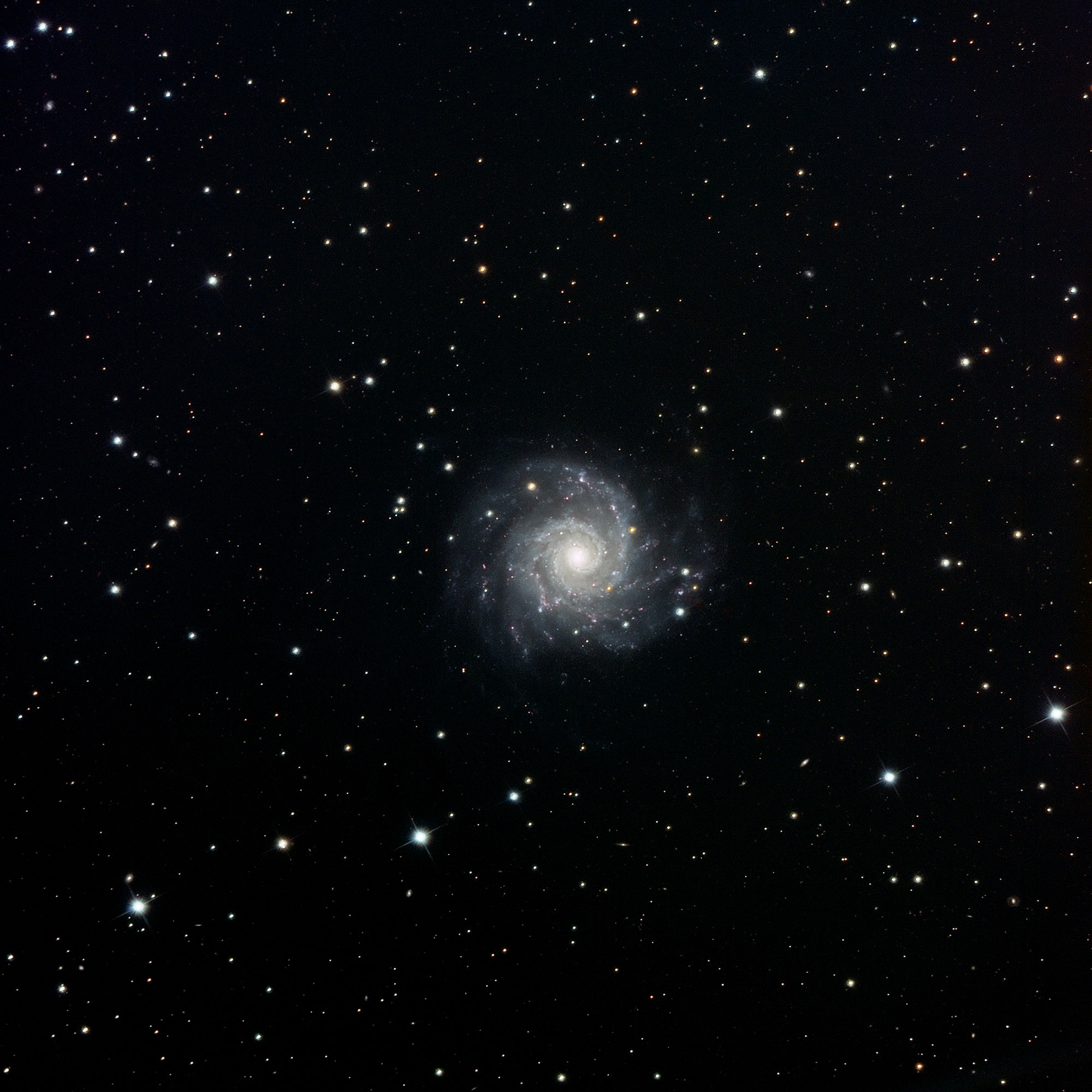
Here’s a long exposure photograph of the spiral galaxy Messier 100. I collected the data for this picture over several nights in late February this year.  Exposure times were 2 hours each of Red, Green and Blue color channels and 2 hours 40 minutes of Luminance. Total exposure time: 8 hours and 40 minutes.

Messier 100 - February 26, 2012

Messier 100 - February 26, 2012

Click the image above for a larger picture, or download this high res version of m100 3630×2420.

Located roughly 55 million light years from Earth, Messier 100 is a grand design spiral galaxy estimated to be 160,000 light years wide.

Photo Details
Messier 100
RGB 2 hours each
Luminance 2 hours 40 minutes
Total exposure 8 hours 40 minutes
Camera: SBIG ST8300
Guider: SBIG 402 with MMOAG Off Axis Guider
Telescope: RCOS 14.5
Mount: Paramount ME
Location: Freeland MD
Date: 02/20/2012, 02/26/2012
Software: The SkyX, CCDSoft, FocusMax, CCDAutoPilot, CCDStack, Photoshop
Comments Off : more...

Apr.03 2012

Venus Pleiades and Satellite

by , under Planets

Here’s a picture of Venus and the Pleiades tonight along with a satellite shooting through. The satellite was captured over the course of two frames and the gap of light in the satellite train is the quick second between exposures. The oblong shape of the planet is caused from clouds floating through the shot.

Venus, Pleiades and Satellite - April 3rd 2012

Venus, Pleiades and Satellite - April 3rd 2012

I tried finding the satellite on calsky but wasn’t able to locate it. The picture was taken at 9:45 from Freeland MD, if anyone is interested in tracking it down.

Comments Off more...

Looking for something?

Use the form below to search the site:

Still not finding what you're looking for? Drop a comment on a post or contact us so we can take care of it!

Archives

All entries, chronologically...